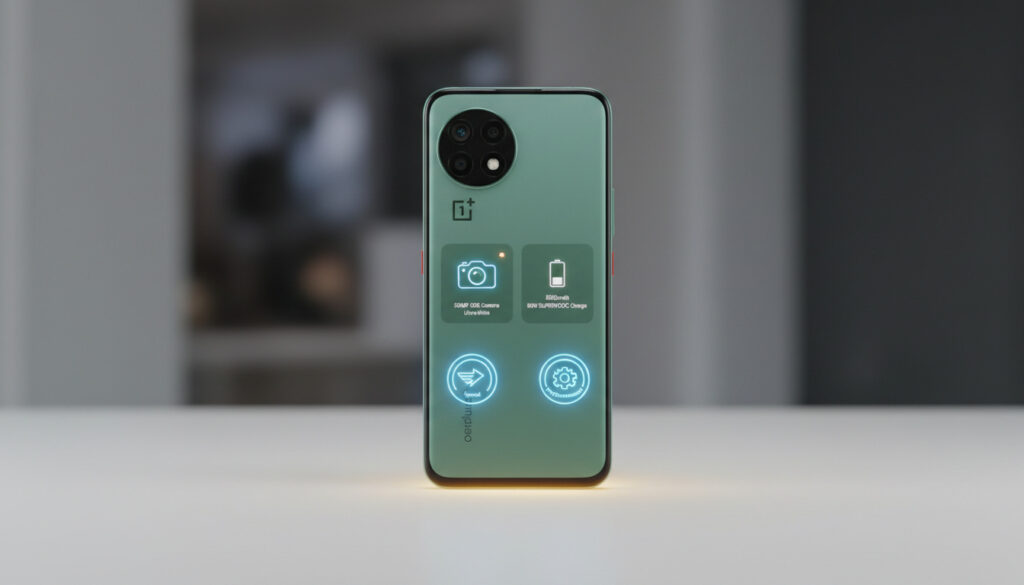
One Plus Nord 3 – Guía de Compra y Características Clave
Performance Meets Accessibility
The OnePlus Nord 3 5G redefined mid-range expectations upon its debut, distancing itself from iterative hardware refreshes by integrating MediaTek’s flagship-tier Dimensity 9000 chipset. Positioned strategically below the numbered flagship series yet above the Core Edition variants, this device targets performance-conscious users unwilling to navigate the €700+ price bracket. With a 120Hz AMOLED display and 80W fast charging, it delivers flagship-adjacent experiences while maintaining the accessible price point that originally established the Nord lineage. The official specifications confirm the technical foundation driving these capabilities here.
Core Specifications
- Display: 6.74-inch Fluid AMOLED, 2772×1240 resolution, 120Hz adaptive refresh rate, HDR10+ certified, 1450 nits peak brightness
- Processor: MediaTek Dimensity 9000 (4nm architecture), Mali-G710 MC10 GPU
- Memory: 8GB or 16GB LPDDR5X RAM; 128GB or 256GB UFS 3.1 storage (non-expandable)
- Camera Array: 50MP Sony IMX890 primary sensor with OIS, 8MP ultra-wide (112° FOV), 2MP macro
- Battery: 5000mAh dual-cell configuration supporting 80W SUPERVOOC charging
- Operating System: OxygenOS 13.1 based on Android 13
- Connectivity: Wi-Fi 6, Bluetooth 5.3, NFC, infrared port
Comprehensive benchmark data and additional technical validation appear in the detailed hardware analysis available at GSMArena.
Strategic Positioning
OnePlus abandoned the Dimensity 1300 architecture found in the Nord 2T, opting instead for the Dimensity 9000’s Cortex-X2 prime core configuration. This transition places the Nord 3 in direct competition with upper-mid-range devices like the Pixel 7a and Samsung Galaxy A54, though the thermal management system and charging velocity provide distinct advantages. The manufacturer clearly prioritized computational throughput and battery logistics over camera versatility, omitting telephoto lenses while retaining vestigial macro sensors. This hardware philosophy reflects an understanding that the target demographic values gaming performance and rapid power replenishment over optical zoom capabilities. Early reviews noted this performance-centric approach distinguishes the device from photography-focused alternatives in comparative testing.
Comparative Analysis
| Specification | OnePlus Nord 3 | OnePlus Nord 2T | OnePlus Nord CE 3 |
|---|---|---|---|
| Processor | Dimensity 9000 (4nm) | Dimensity 1300 (6nm) | Snapdragon 782G (6nm) |
| Display Refresh | 120Hz (adaptive) | 90Hz (fixed) | 120Hz (adaptive) |
| Primary Camera | 50MP IMX890 (OIS) | 50MP IMX766 (OIS) | 50MP IMX890 (OIS) |
| Charging Speed | 80W | 80W | 67W |
| Build Material | Plastic frame, glass back | Plastic frame, glass back | Plastic construction |
| 5G Capability | Sub-6GHz (14 bands) | Sub-6GHz (11 bands) | Sub-6GHz (7 bands) |
Hardware Deep Dive
The Dimensity 9000 delivers benchmark scores approaching Snapdragon 8+ Gen 1 levels, translating to fluid multitasking and high-fidelity gaming. Genshin Impact maintains 50-55fps at high settings during initial gameplay, though thermal throttling manifests after sustained 45-minute sessions, reducing frame rates to 40fps. The 6.74-inch AMOLED panel exhibits minimal color deviation across viewing angles, with the 1450-nit peak brightness ensuring outdoor visibility. However, the PWM dimming at 360Hz may affect users sensitive to flicker during low-light usage.
The 80W charging infrastructure genuinely differentiates the device within its category. Real-world testing achieves full battery replenishment in 32 minutes from 1%, with 15-minute charges delivering approximately 60% capacity. This efficiency mitigates the absence of wireless charging, a notable omission at this price tier. The Sony IMX890 primary sensor captures detailed daylight imagery with natural color science, though computational photography processing falls short of Google’s Tensor-driven Night Sight capabilities. Extended evaluation of camera performance and thermal characteristics appears in this comprehensive review.
Update Schedule and Longevity
OnePlus launched the Nord 3 on , with immediate retail availability across European and Indian markets. The company committed to three major Android version updates (extending to Android 16) and four years of security patches, ensuring viability through 2027. OxygenOS 14, built atop Android 14, reached stable release for the device in , introducing redesigned Aquamorphic visuals and improved cross-device clipboard functionality. Update deployment schedules and beta program details remain accessible through development forums.
Navigating the Portfolio
Consumer confusion persists regarding the Nord hierarchy. The Nord 3 occupies the premium mid-range tier, distinct from the Nord CE (Core Edition) series which emphasizes battery endurance and basic functionality over processing power. Unlike the fragmented “T” series releases of previous years, OnePlus consolidated its mid-year refresh into this single flagship-killer specification. The device effectively replaces both the Nord 2 and Nord 2T, streamlining the product stack. Those exploring the broader ecosystem can find related coverage within the OnePlus archive.
Value Assessment
At launch pricing, the Nord 3 presented compelling value through its combination of flagship silicon and ultra-rapid charging. The plastic frame construction and lack of IP68 certification (limited to IP54 splash resistance) distinguish it from true premium devices, yet these compromises feel acceptable given the performance headroom provided. The fixed-focus 8MP ultra-wide camera and 2MP macro sensor represent the primary hardware weaknesses, delivering acceptable results only in ideal lighting conditions. For users prioritizing application launch speeds, multitasking efficiency, and charging convenience over telephoto flexibility or wireless power, the device maintains strong competitive positioning. Camera benchmarking results demonstrate the optical limitations.
Critical Reception
“The Nord 3 finally delivers the performance headroom that OxygenOS deserves. After generations of mid-tier chipsets struggling to maintain the interface’s characteristic fluidity, the Dimensity 9000 eliminates the micro-stutters and app reloads that plagued previous iterations, creating a genuinely premium user experience at a fraction of flagship costs.”
— TechRadar Evaluation, 2023
Conclusion
The OnePlus Nord 3 succeeds as a performance-centric mid-range solution, sacrificing camera versatility for processing power and charging efficiency. It suits users upgrading from aging flagships who refuse to compromise on application responsiveness, though photography enthusiasts should consider alternatives with superior computational imaging. With extended software support through 2027 and robust internal hardware, the device retains relevance despite subsequent releases, provided buyers accept its plastic construction and limited optical capabilities. Comprehensive market comparisons against current alternatives appear in our detailed mid-range smartphone comparison.
Common Questions
Does the OnePlus Nord 3 support wireless charging?
No, the device relies exclusively on wired charging via its USB-C 2.0 port. The 80W SUPERVOOC adapter included in the retail package compensates for this omission through rapid replenishment speeds.
What water resistance rating does the Nord 3 carry?
The device holds an IP54 certification, indicating protection against dust ingress and water splashes from any direction. It withstands rain exposure but should not be submerged in water.
How many years of software support will the Nord 3 receive?
OnePlus committed to three major Android version updates (Android 13 through Android 16) and four years of security maintenance, extending support until approximately mid-2027.
Is the storage expandable via microSD?
No, the Nord 3 lacks a microSD slot. Storage configurations are fixed at 128GB or 256GB UFS 3.1. Users requiring additional capacity must rely on cloud storage solutions.
Can the Nord 3 handle demanding games like Genshin Impact?
Yes, the Dimensity 9000 processor manages high settings at 50-60fps initially, though extended sessions trigger thermal throttling after 45 minutes, necessitating medium settings for sustained gameplay.
What distinguishes the Nord 3 from the Nord CE 3?
The Nord 3 utilizes a superior Dimensity 9000 chipset versus the CE 3’s Snapdragon 782G, offers faster 80W charging (vs 67W), and features a more premium glass back construction compared to the CE 3’s all-plastic build.
Mas articulos relacionados
 Salmón a la plancha: receta fácil, jugosa y sin pegotes
 El tiempo en Cabezón de la Sal: previsión actualizada
 UD Las Palmas – Castellón: dueños, dónde ver y fichajes
 Sorteo calendario La Liga 2025/26: fechas, equipos y consulta
 Real Madrid contra Leganés: remontada 4-1 y alineaciones
 El tiempo en Santaella: clima, temperaturas y predicción
 New Balance 740 Mujer: Precios, Colores y Comparativa 530
 Cómo recuperar archivos eliminados en Windows, Android y la nube